

Field service teams face significant challenges: a shortage of skilled workers, increasingly complex systems, and rising expectations regarding response times shape the day-to-day reality of field service. Traditional digital tools reach their limits when data volumes become overwhelming or when scheduling reaches the limits of manual capacity. AI in Field Service enhances existing FSM systems to significantly streamline processes in dispatch planning and service calls. But where does its use actually save time, and where does it merely create new interfaces?
What Does Artificial Intelligence Mean for Technical Field Service?
What happens in the morning at the dispatch center usually sets the tone for the entire day: A technician calls in sick, a piece of equipment breaks down, and two urgent jobs come in at the same time. Manually searching for technician qualifications, replacement parts, and travel times costs valuable hours in moments like these. Artificial intelligence helps address this bottleneck in Field Service Management (FSM). Instead of analyzing sales figures, the software evaluates existing operational data in real time and provides scheduling with a solid basis for decision-making.
The Biggest Challenges in Day-to-Day Field Service Without AI: These Bottlenecks Hinder Service
Incomplete data, hours-long coordination efforts, and unforeseen incidents put a strain on the service organization. Without intelligent data processing, outdated planning tools reach their limits. These three key hurdles shape day-to-day service operations:
Applications of AI in Technical Field Service—Where Algorithms Streamline Workflows
The benefits of algorithms are evident at the key touchpoints of the service organization. Artificial intelligence processes large volumes of data in real time, reducing the workload on dispatch, field service, and customer communications.
Intelligent Dispatching: Shortening Travel Times and Matching Qualifications
Manual route planning reaches its capacity limits when disruptions occur. Intelligent systems simultaneously evaluate relevant factors for this purpose:

For rush orders, the software calculates the optimal assignment within seconds and suggests the most efficient route. This prevents planning errors, reduces empty runs, and lightens the workload for the office team in managing daily capacity.
Fault Analysis on Site: Accessing Repair Data on a Mobile Device
On site, service technicians need quick access to relevant information. Intelligent assistance systems analyze incoming fault codes, search historical service reports, and provide tailored repair instructions or schematics on the mobile device. With immediate insight into previous work and components that have already been replaced, technicians can identify the cause of malfunctions without time-consuming follow-up inquiries to the back office. This shortens on-site diagnosis time and increases the likelihood of a successful repair on the first attempt.
Predictive Maintenance: Preventing Equipment Failures Before Downtime Occurs
By evaluating continuous operational and condition data, the software detects deviations from normal operation before unplanned downtime occurs. The system automatically generates maintenance orders with appropriate prioritization and initiates spare part reservations. As a result, service shifts from reactive troubleshooting to predictable maintenance intervals.
Digital Reporting: Complete Service Reports Directly at the Customer’s Site
Creating reports after the fact at the end of the workday is time-consuming and error-prone. Voice-based data capture tools and text generation organize technicians’ notes, dictations, or photos directly during the service call. The result:
Customer Self-Service: Automated Status Inquiries and Appointment Management
Interfaces with the customer portal or messaging services automate routine inquiries related to service calls. Customers can check the service call status, scheduled maintenance appointments, or estimated arrival times without tying up the dispatch team by phone. If appointments are rescheduled, the system automatically notifies affected customers via message and offers direct alternative options.
Simplifying Field Service Management Processes
Use historical service data to generate automatic route and resource recommendations. Innosoft ensures that your technicians’ skills and spare parts inventory are linked within the system so that intelligent recommendations are based on reliable data.
Benefits of AI in Technical Field Service for Companies and Teams
The use of intelligent algorithms improves key performance indicators in service operations. Rather than merely simplifying processes, automation directly results in shorter turnaround times, reduced costs, and higher capacity utilization.
Typical Challenges in Implementing AI in Field Service
The implementation of artificial intelligence in field service requires adjustments throughout the entire service organization. In addition to the technical requirements, typical organizational tasks and learning processes accompany the transition to automated workflows:
Step-by-Step Guide to AI Optimization: How to Successfully Implement the Transition in the Field
Modernizing service processes doesn’t require a risky, complete overhaul. A pragmatic approach in manageable stages gets you to your goal faster and minimizes the burden on the organization.
Tip 1: Start by limiting yourself to a single pilot project
Instead of redesigning all processes at once, it’s advisable to choose a clearly defined starting point that delivers significant benefits. The initial focus should be on acute bottlenecks, such as automated route planning or the digital recording of service reports. A well-defined pilot project delivers quick results and convinces both management and staff of the benefits of the new processes. In addition, selective adjustments can be easily managed during ongoing operations and fine-tuned step by step without significant risk.
Tip 2: Use FSM software as a reliable foundation for your data streams
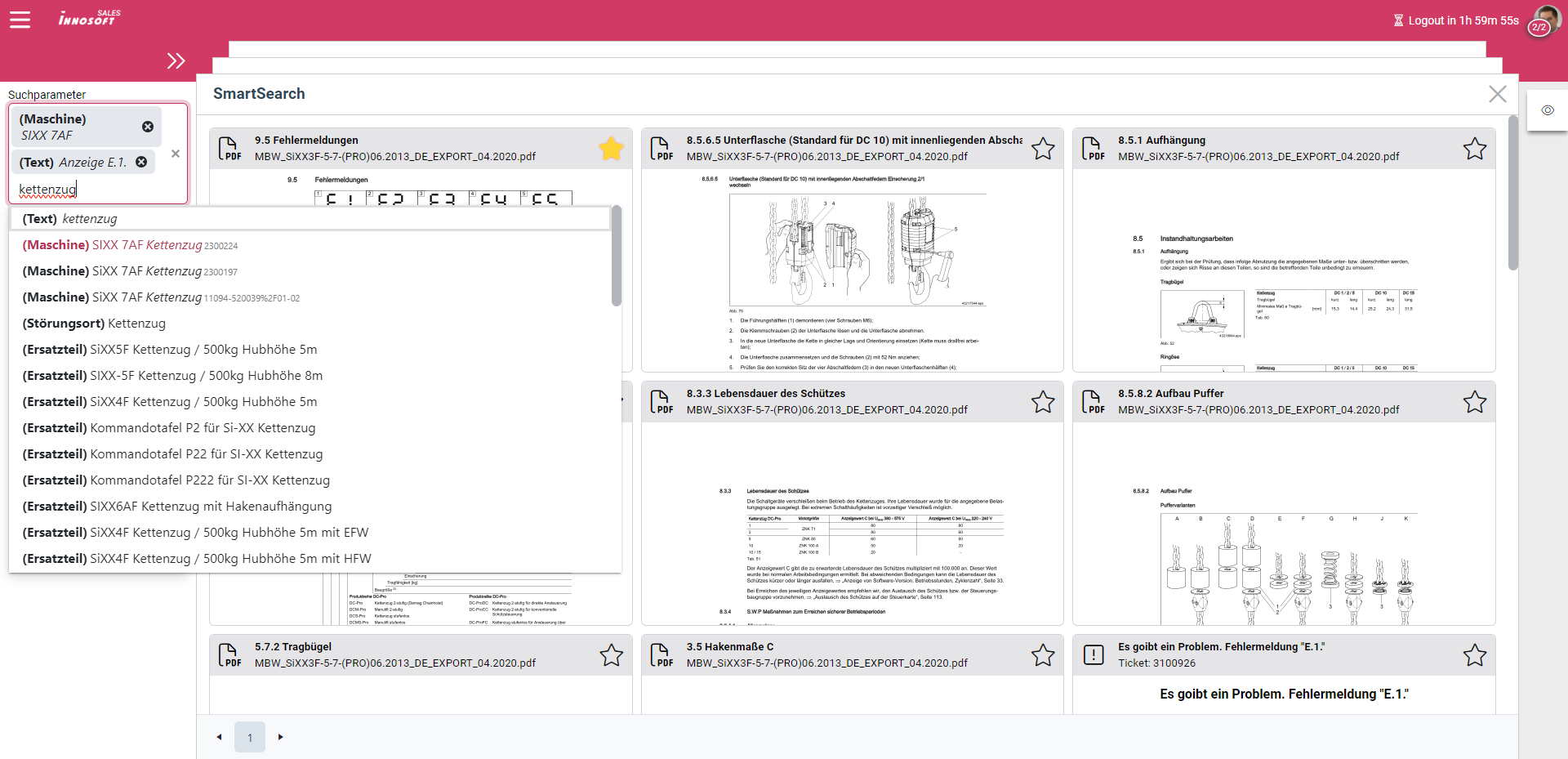
Intelligent algorithms require a stable foundation for daily data exchange. A specialized FSM browser solution such as Innosoft consolidates scattered data streams in the machinery and plant engineering sector and creates the modular foundation necessary for AI implementation:
Without an end-to-end FSM platform, the algorithms lack the necessary real-time information from ongoing operations.
Tip 3: Ensure Acceptance Within the Team Through Continuous Feedback
The long-term success of a software migration stands or falls on user acceptance. It is important to involve the service teams early on and to include dispatchers and technicians in the change process from the very beginning. Regular feedback sessions help to address experiences from day-to-day work and identify weaknesses in processes early on. Based on these real-world experiences, settings and workflows can then be continuously adjusted and gradually optimized.
Conclusion: Why AI Is Becoming the New Standard in Field Service
The use of AI in field service is evolving from a competitive advantage to the standard in modern service management. Intelligent software reduces travel times, prevents bottlenecks, and noticeably relieves service teams of bureaucratic burdens.
The economic benefits are evident in higher first-time resolution rates, lower costs, and reduced workload for employees. This requires well-maintained master data, employee engagement, and a strong foundation.
FAQ – Frequently Asked Questions About AI in Field Service
In the context of field service management, artificial intelligence refers to the automated analysis of service data to optimize processes. Rather than generating general text or images, the technology provides targeted support for scheduling, route planning, and the provision of relevant information for technical service.
While sales systems primarily analyze customer potential, evaluate sales opportunities, and prepare quotes, field service software focuses on operational maintenance processes. The key priorities here are optimal route planning, spare parts availability, service personnel qualifications, and the rapid resolution of technical issues.
The system automatically matches incoming service orders with the appropriate parameters. It takes into account technicians’ individual qualifications, current locations, availability, and inventory levels of required replacement parts to create optimal routes and work schedules.
Using mobile devices, service technicians have immediate access to the system’s complete history, technical documentation, and schematics. This enables precise diagnostics and speeds up troubleshooting directly on-site.
Digital tools significantly reduce the time it takes to create service reports. Voice memos can be converted into structured reports right on-site, while service hours and materials used are automatically recorded in the report.
High-quality master data and maintenance histories form the foundation. In addition, the organization needs clearly structured processes and modern FSM software as a central platform for data exchange. A specialized solution such as Innosoft consolidates disparate data streams and creates a modular foundation for the use of intelligent functions.
No, the software does not replace experience-based knowledge. It handles routine administrative tasks and provides data-driven decision-making support, while the final assessment of complex malfunctions and personal customer contact remain the responsibility of qualified specialists.