
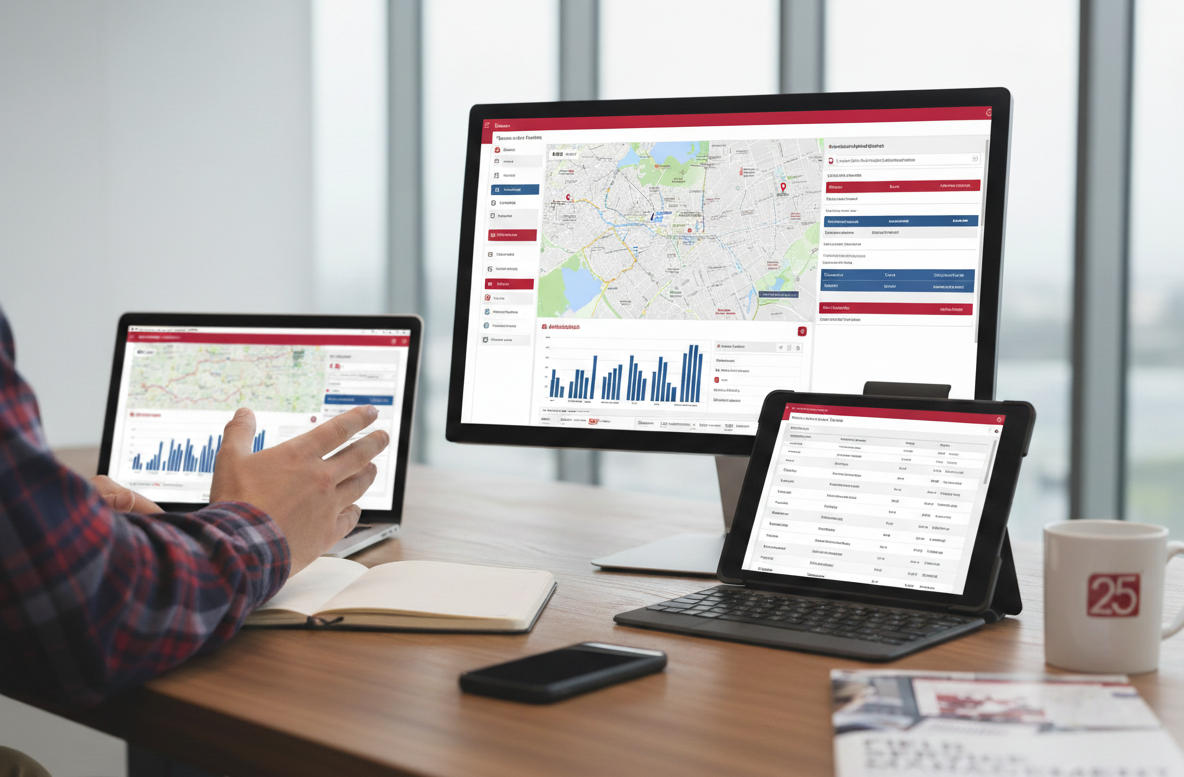
Verlässliche Stammdaten ermöglichen belastbare Annahmen zu Ressourcen, Zuständigkeiten und Strukturen über mehrere Planungszyklen hinweg.
Verlässliche Stammdaten ermöglichen belastbare Annahmen zu Ressourcen, Zuständigkeiten und Strukturen über mehrere Planungszyklen hinweg.
Verlässliche Stammdaten ermöglichen belastbare Annahmen zu Ressourcen, Zuständigkeiten und Strukturen über mehrere Planungszyklen hinweg.
Verlässliche Stammdaten ermöglichen belastbare Annahmen zu Ressourcen, Zuständigkeiten und Strukturen über mehrere Planungszyklen hinweg.
Planning at a higher level begins with a clear data structure that provides initial guidelines. In resource planning, master data plays this role by creating an orderly framework before operational details are taken into account.
Without reference to specific dates or individual assignments, it provides early pointers for further planning. This allows connections to be classified and preparatory decisions to be made in a comprehensible manner.
Definition: What is master data?
In the context of field service management (FSM), master data refers to permanently valid basic information that serves to uniquely describe central objects. It forms a stable data set that is maintained independently of individual assignments or short-term changes.
It includes fixed properties such as identities, assignments, or basic characteristics. This information rarely changes and remains consistent over several planning periods. Within FSM systems, master data thus represents a clear reference level on which other types of data are based.
What information does master data in FSM include?
Master data contains specific descriptive information that is used in FSM to clearly map central objects. It forms a fixed data set that is managed independently of individual assignments and serves as the basis for structured assignment and resource planning.
Typical contents of master data in FSM include:
This information is characterized by stability and clarity. It describes consistent characteristics and provides an orderly frame of reference without depicting temporal sequences or specific applications.

Consistent master data for clear planning
Maintain key information in a consistent and system-supported manner. Innosoft ensures that master data is clearly available and that planning is based on reliable framework conditions.
Two types of data – master data and dynamic planning information
Within planning systems, information is assigned to different types of data. A clear distinction between master data and transaction data provides clarity and facilitates the classification of planning-relevant information. Both types of data fulfill different tasks and yet rely on each other.
| Criterion | Master Data | Transactional Data |
| Data characteristics | long-term valid and stable | time-bound and changeable |
| Content focus | descriptive base information | specific processes and events |
| Frequency of change | infrequent updates | regular updates |
| Relation to planning | provides fixed references | represents current planning and execution data |
| Examples | employees, resources, locations | assignments, time records, status reports |
| Role in the system | structuring data foundation | operational data basis |
This clear distinction ensures that the data structure remains comprehensible and consistent. Master data provides the fixed framework to which transaction data refers. On this basis, planning information can be clearly assigned without changing fundamental structures.
Master data: Roles within resource planning
Within resource planning, master data assumes various clearly defined roles relating to structure, orientation, and comparability. It does not have an impact at the operational level, but rather supports planning by providing stable references to which further information can be linked.
The key roles of master data in resource planning include:
Through these roles, master data contributes to clear and robust planning structures without anticipating operational processes or technical details.
Growth-oriented structures – advantages of consistent master data
Well-maintained master data has a direct impact on the quality of company-wide processes. It creates a uniform information base that different departments can access without having to accept discrepancies or room for interpretation. This allows structures to be clearly mapped and kept stable in the long term.
Companies benefit in several areas:
Processes are based on identical information, which makes coordination between departments clearer and more structured.
Reliable master data enables robust assumptions about resources, responsibilities, and structures across multiple planning cycles.
Clear and consistent data sets reduce queries, correction loops, and manual comparisons.
Organizational models, resource allocations, and responsibilities remain clear and comprehensible.
Cleanly maintained master data can be transferred to new requirements without fundamentally adapting existing structures.
In this way, well-maintained master data supports stable, traceable, and easily controllable business processes without anticipating operational details or placing individual systems in the foreground.
Clear structures for reliable planning
Master data forms the framework for structured planning processes. Innosoft supports you in clearly recording information and using it as the basis for transparent resource planning.
Objectives of structured master data management
Master data management describes structured procedures for maintaining and controlling master data across multiple systems. The objective is to create a uniformly managed database that follows clear rules and remains consistent over time.
The central objectives of master data management can be summarized as follows:
- Ensuring consistent master data across all systems involved
- Clear assignment of responsibilities for maintenance, approval, and adjustment
- Reduction of deviations and duplicates within the data sets
- Standardized recording and maintenance based on defined specifications
- Reliable use of identical master data in different applications
Impact of master data quality on planning
The quality of master data determines how robust planning processes are designed. Complete, consistent, and up-to-date information ensures that information remains unambiguous and consistent across different systems. Deviations or outdated content, on the other hand, lead to uncertainties in planning.
The unambiguity of data is particularly relevant. Clear assignments prevent ambiguities and facilitate correct use in downstream processes. Up-to-date information also plays a central role, as only well-maintained master data corresponds to the actual framework conditions.
Consistently high master data quality supports stable planning assumptions and promotes the traceability of decisions. It creates trust in the database and thus forms a reliable basis for structured processes.
Software-supported resource planning with master data
Modern software solutions such as Innosoft work on the basis of centrally maintained master data that is available system-wide. They serve as a uniform reference so that planning logic, evaluations, and adjustments are based on consistent information. Especially for complex planning requirements, this database ensures clear structures within the application.
The use of software based on maintained master data offers the following advantages, among others:

Innosoft: Clear resource planning based on master data
Structured resource planning is based on a clearly managed database that clearly shows interrelationships. Master data provides the necessary framework for this by clearly mapping resources, responsibilities, and structures.
In system-supported planning, consistent master data ensures transparent capacities and traceable allocations. Adjustments can be made in a targeted manner without affecting existing planning structures.
We would be happy to show you how clear resource planning based on well-maintained master data can be implemented with solutions from Innosoft.
FAQ – Frequently asked questions about master data
Master data refers to fundamental, permanently valid information that uniquely describes central objects. It forms a stable data set and serves as a reference for other types of data. Changes are usually rare and controlled.
Master data includes identifying and descriptive information that is maintained independently of individual transactions. Typical examples are persons, resources, products, customers, locations, or organizational units. The long-term nature of this information is crucial.
Personal master data includes fixed information for unique identification. This includes, among other things, name, personnel number, role, qualifications, organizational assignment, or contractually agreed working hours. Time-dependent information such as working hours is not included.
A master data sheet clearly summarizes all relevant master data for an object. It contains identification features, basic properties, and fixed assignments in a structured format. The exact structure depends on the respective area of application and the systems used.
Master data is recorded according to clearly defined specifications to ensure consistency. Maintenance processes regulate who is authorized to make changes and how updates are documented. The goal is to create a consistent and traceable database.
Master data forms the basis for structured workflows and planning processes. Consistent and unambiguous information reduces uncertainty, facilitates assignments, and supports consistent evaluations across different systems.
Regular maintenance ensures that master data remains up-to-date, complete, and accurate. Outdated or inconsistent information leads to misinterpretations and additional coordination efforts. A well-maintained database supports stable and traceable processes.